
Overview
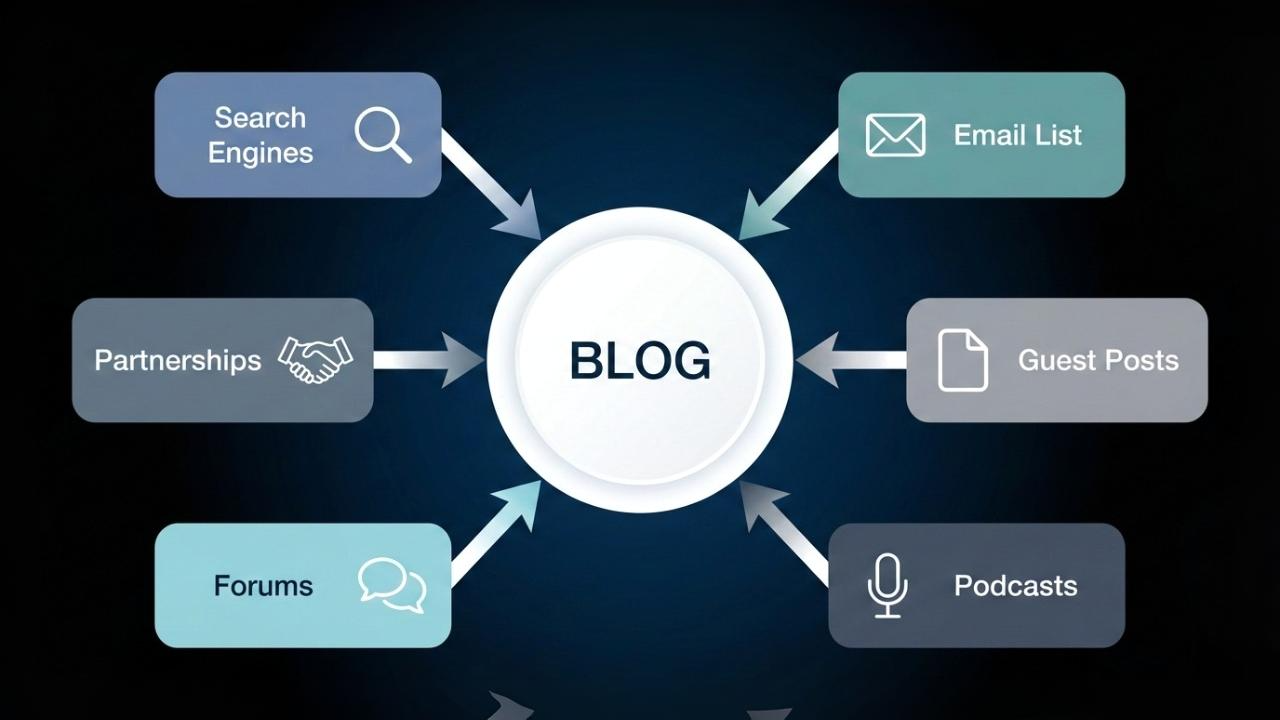
Promoting a blog without social media means building traffic through channels you own or control—like search engines, email lists, and direct partnerships—rather than depending on Instagram, Facebook, TikTok, or similar platforms. It's a deliberate approach focused on sustainable growth methods that don't rely on algorithms or follower counts.
This matters because social media platforms change constantly. Algorithms shift. Accounts get shadowbanned. Reach drops overnight. When you build traffic through other channels, you're not at the mercy of these changes. You're creating a foundation that's steadier and more reliable over time.
This guide covers twelve specific promotion methods that work without social media presence. Some build momentum slowly but compound over time. Others can generate quicker results but require more direct effort. We'll look at email marketing, search optimization, guest content, community participation, partnerships, and several other practical approaches that don't involve posting stories or chasing viral trends.
Core Methods for Promotion
Method #1: Email Marketing & Newsletter Strategy
Email gives you direct access to people who've chosen to hear from you. That's powerful. No algorithm decides if your content reaches them—you send an email, they receive it. It's that straightforward.
Building an email list starts with offering something valuable in exchange for an email address. This could be a PDF guide, checklist, mini-course, or exclusive content. The key is making it relevant enough that someone willingly trades their contact information for it.
Once you have subscribers, consistency matters more than frequency. Whether you email weekly or monthly, stick to a schedule. Share your latest posts, provide exclusive insights, or curate helpful resources. The goal is maintaining the relationship so that when you publish new content, these readers actually show up.
Email marketing works because it's permission-based. These people asked to hear from you. They're already interested in what you have to say. That makes them far more likely to read your blog posts, engage with your content, and eventually become loyal readers than someone who stumbled across your profile on a social platform.
Method #2: SEO & Organic Search Optimization
Search engines send people to your blog when they're actively looking for information you've written about. Unlike social media where you're interrupting someone's scroll, search traffic comes from intent. Someone typed a question into Google, and your blog post answered it.
This requires understanding what people search for in your topic area. Keyword research tools can help, but sometimes the best insights come from forums, blog comments, and the questions people actually ask. Look for specific phrases with clear intent—"how to promote blog without social media" is more actionable than just "blogging tips."
If you’re still choosing where to publish, using the easiest blog platform to use for beginners makes SEO implementation much simpler.
Once you know what people search for, create content that genuinely answers those queries. Write clearly. Structure posts with descriptive headings. Include the actual language people use when searching. But don't force it—if your writing sounds unnatural because you're stuffing in keywords, you've gone too far.
Search optimization is a long game. New posts rarely rank immediately. It typically takes months before Google determines where your content deserves to appear in results. But here's what makes it worthwhile: that traffic can continue for years. A post written today might still bring visitors three years from now, long after a social media post would have disappeared from feeds entirely.
Method #3: Guest Blogging & Content Syndication
Writing for other websites puts your work in front of audiences you haven't built yet. When you publish a guest post on an established blog, you're borrowing their readership. Some of those readers will click through to learn more about you.
The process is straightforward but requires effort. Find blogs in your niche that accept guest contributions. Study their existing content to understand what they publish and how they approach topics. Then pitch a specific idea that fits their audience while showcasing your perspective.
Quality matters more than quantity here. One well-placed guest post on a respected site in your niche can bring more meaningful traffic than ten posts on random, low-traffic blogs. Look for sites with engaged readerships, not just high visitor numbers.
Content syndication works similarly but in reverse—you publish on your blog first, then republish that content on platforms like Medium or industry-specific sites. Most platforms allow this as long as you link back to the original. It's not quite as powerful as original guest posts for building authority, but it expands your reach with content you've already created.
Method #4: Community Participation & Forum Engagement
Online communities gather people interested in specific topics. When you show up consistently in these spaces and actually help people, some of them will naturally become curious about who you are and what else you've written.
This isn't about dropping links to your blog posts. That gets you banned quickly. Instead, genuinely participate. Answer questions thoroughly. Share insights from your experience. Provide value without expecting immediate returns.
Reddit has communities for nearly every topic imaginable. Quora connects people asking questions with people who can answer them. Industry-specific forums bring together practitioners and enthusiasts. Find where your target readers already gather and become a helpful presence there.
Many creators even explore whether you can actually make money on Reddit through ethical community-based strategies.
Over time, as you build recognition in these communities, you can include your blog in your profile or signature. When your contributions are consistently valuable, people naturally want to know more about you. They'll click through to your site because they trust what you have to say, not because you pushed your link at them.
Method #5: Podcast Appearances & Audio Content
Podcasts reach people during commutes, workouts, and household tasks—times when they're not reading blogs. When you appear as a guest on relevant podcasts, you're connecting with an audience that's already engaged and receptive.
Finding podcast opportunities starts with research. Look for shows in your niche with decent listener numbers and engaged audiences. Small, focused podcasts with highly relevant audiences often work better than massive shows where your message gets lost.
When you reach out to podcast hosts, make it easy for them. Explain clearly what value you'd bring to their listeners. Suggest specific topics you could discuss. Include any previous podcast appearances or speaking experience. Hosts want guests who'll deliver good content without requiring excessive preparation.
During the interview, mention your blog naturally when relevant. Most podcast hosts will include a link in their show notes, and listeners who enjoyed your insights will check it out. The key is being genuinely interesting and helpful—marketing yourself too aggressively turns listeners off.
Method #6: Strategic Partnerships & Collaborations
Partnering with other bloggers or creators in your space creates mutual benefit. You might co-create content, cross-promote each other's work, or collaborate on projects that serve both audiences.
These partnerships work best when there's genuine alignment. Look for bloggers who serve similar audiences but aren't direct competitors. If you write about personal finance and someone else focuses on career development, there's natural overlap without competition.
Co-created content gives both partners something to share with their audiences. This could be a joint webinar, a collaborative resource, or a blog post series where you each contribute your perspective. Each partner promotes it to their audience, expanding reach for both.
Cross-promotion can be as simple as recommending each other's content when relevant. When you genuinely find another blogger's post helpful for your readers, share it. Over time, this builds relationships where others reciprocate. It's slower than paid promotion but builds authentic connections.
Method #7: Direct Traffic & URL Sharing
Direct traffic comes from people typing your URL directly or clicking a link that's not tracked through typical channels. This includes offline promotion, which social-media-focused bloggers often overlook entirely.
Business cards can include your blog URL. Email signatures should definitely link to it. If you speak at events or teach workshops, mention your blog and make the URL memorable enough that people will actually type it in later.
Word-of-mouth remains powerful. When someone asks about a topic you've written about, you can point them directly to your blog. This happens in professional contexts, casual conversations, and online discussions. The more clearly you can articulate what your blog offers, the more likely people are to remember it and share it with others.
QR codes bridge offline and online promotion. Include them on printed materials, conference materials, or anywhere else people might encounter your work in physical spaces. They make it effortless for someone to pull out their phone and immediately visit your site.
Method #8: Content Aggregators & Discovery Platforms
Content aggregators collect and organize content from across the web, making it discoverable to people browsing by topic or interest. Platforms like Medium, Flipboard, and niche-specific aggregators can expose your work to new readers.
Medium allows you to republish blog content or write original pieces for their platform. Their algorithm surfaces content to readers based on interests and reading history. While you don't control who sees your work, you benefit from being part of a large, active platform.
RSS feed directories let people discover blogs by category. Submit your blog's RSS feed to aggregators like Feedly, AllTop, and niche-specific directories. People who use RSS readers to follow blogs might discover yours through these directories.
Content discovery platforms like Pocket and Flipboard let users save and organize content they find interesting. While you can't directly submit to these platforms, creating easily sharable content with clear headlines increases the chances readers will save and share your posts through these services.
Method #9: Paid Advertising (Non-Social)
Search engine advertising puts your blog posts in front of people actively searching for related topics. Unlike social media ads that interrupt browsing, search ads match what someone's already looking for.
Google Ads lets you bid on keywords relevant to your content. When someone searches those terms, your ad appears. You pay only when someone clicks. This can be expensive depending on your niche, but it targets high-intent traffic—people literally asking for information you provide.
Display advertising places banner ads across networks of websites. These work better for brand awareness than direct response, but they can introduce your blog to people browsing related content across the web.
Sponsored content placements on other websites or newsletters can work well if there's strong audience alignment. You pay to have your content featured or linked, getting exposure to an established audience. This tends to be more expensive but can deliver higher-quality traffic than standard display ads.
Method #10: Online Courses & Webinars
Educational content attracts people interested in learning. When you create a free course or webinar on a topic related to your blog, you're providing immediate value while naturally introducing people to your other content.
Free webinars work as lead magnets. Promote them through your email list, on relevant forums, and through partnerships with other creators. During the webinar, mention your blog as a resource for going deeper on topics you're covering. Include links in follow-up emails.
Platforms like Teachable, Thinkific, or even YouTube let you host course content. As students work through lessons, naturally reference blog posts that expand on specific points. Students already engaged with your teaching will likely want more.
The registration process for courses or webinars builds your email list. Even if someone doesn't attend or complete the course, you've captured their contact information and demonstrated expertise. That positions future blog promotion more effectively.
Method #11: Press Releases & Media Outreach
Press releases work when you have genuinely newsworthy information—launching something significant, publishing original research, or commenting on timely industry developments. Local media and trade publications often need expert sources and interesting stories.
Services like PRWeb or HARO (Help a Reporter Out) connect you with journalists looking for sources. When you provide valuable quotes or insights, articles about you or your expertise get published, often linking back to your blog.
Local news outlets frequently need community voices and expert commentary. If your blog relates to local issues or you can offer expertise on trending topics, reach out to local journalists. Being quoted as a local expert builds credibility and drives traffic from readers interested in that coverage.
Trade publications and industry blogs often accept contributed articles or feature expert commentary. These placements reach people specifically interested in your field, making them high-quality traffic sources even if audience size is smaller than general media.
Method #12: Referral Programs & Incentive Systems
Referral programs reward existing readers for bringing in new ones. When someone genuinely enjoys your content and you make it easy for them to share it while recognizing their effort, they're more likely to actively promote your blog.
Simple incentive structures work best. Offer exclusive content, early access to posts, or small bonuses when readers refer friends who sign up for your email list. The reward doesn't need to be expensive—recognition and exclusive access often motivate people more than monetary compensation.
Affiliate programs let other bloggers or creators earn commissions by promoting your content or products. If you sell digital products through your blog, setting up an affiliate program creates incentive for others to drive traffic your way.
Tracking referrals requires simple systems. Unique referral links let you identify who brought in which subscribers. Many email platforms include built-in referral tracking. Keep it straightforward so readers can participate without technical headaches.
Implementation Considerations
Time Investment vs. Results
Different promotion methods produce results on different timelines. Understanding this helps you set realistic expectations and choose approaches that match your situation.
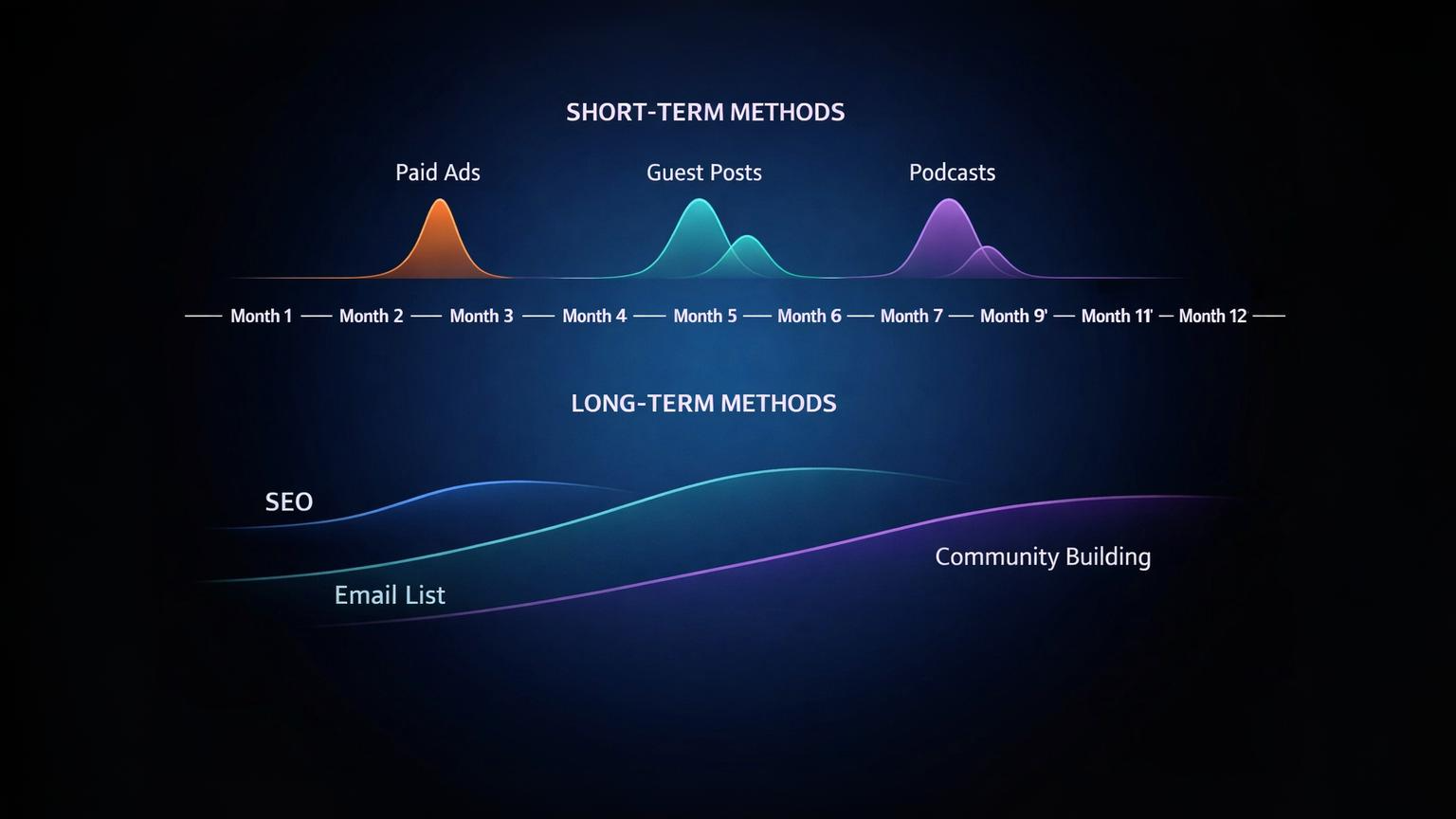
Email marketing and community participation typically show results within weeks to a few months. You're connecting directly with people and building relationships that convert relatively quickly into blog traffic. But building an email list from scratch or establishing yourself in a community requires consistent effort over time.
SEO and organic search operate on much longer timelines. Most content takes three to six months before it starts ranking meaningfully, and peak performance often doesn't arrive until a year or more after publication. But once your content ranks, it can bring traffic for years with minimal additional effort.
Guest blogging and podcast appearances can generate traffic spikes relatively quickly—within days or weeks of publication. However, sustaining that traffic requires constantly securing new opportunities. One guest post might bring a surge of visitors, but that surge fades unless you keep creating new guest content.
Paid advertising produces the fastest results. Your ads can start showing and bringing traffic within hours of launching a campaign. But traffic stops the moment you stop paying. It's the most immediate method but also the least sustainable without ongoing investment.
Budget Requirements
Many effective blog promotion methods require time rather than money, but paid options can accelerate growth if you have budget available.
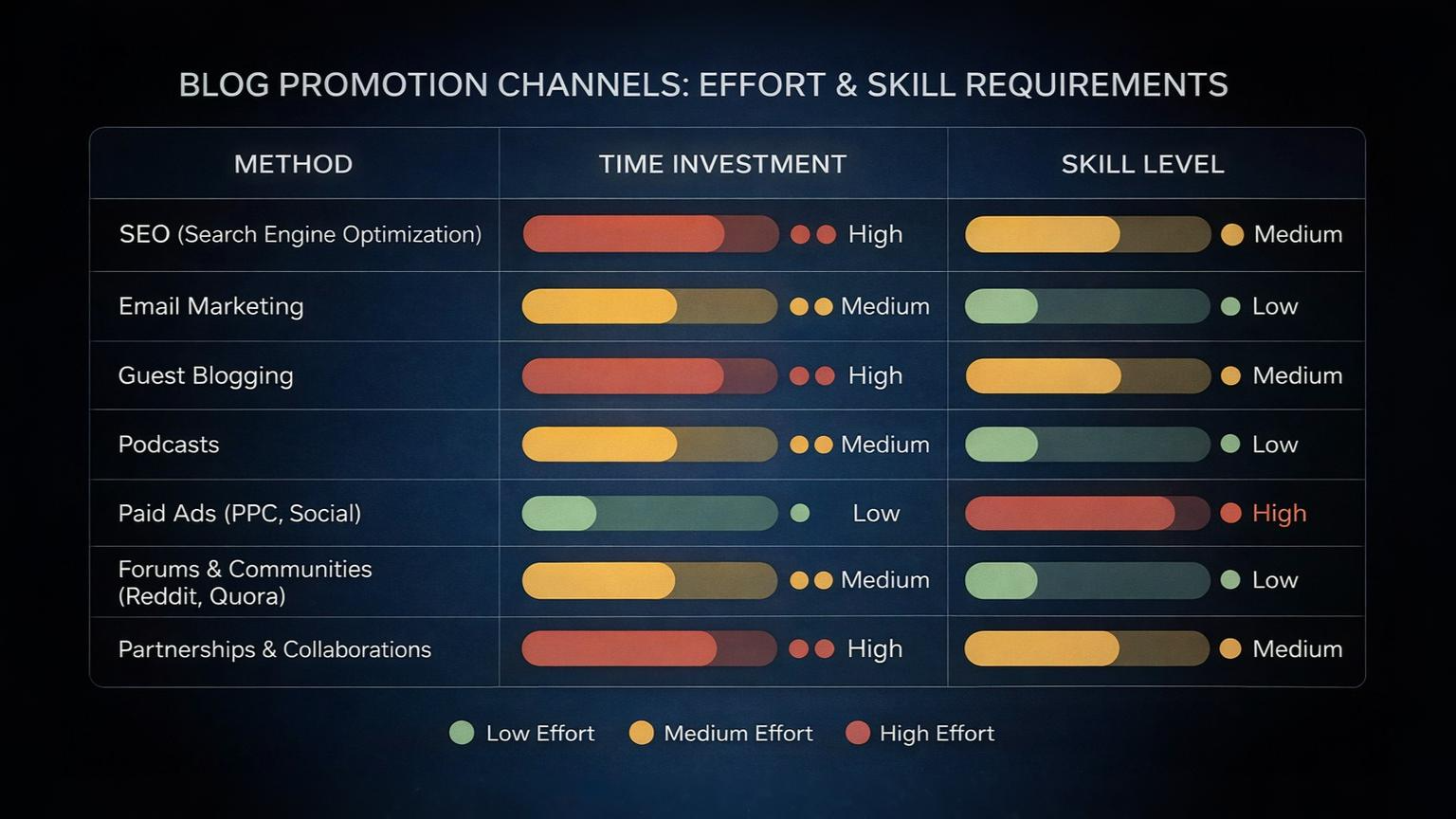
Free methods include SEO, community participation, organic email list building, and relationship-based approaches like guest blogging and partnerships. These cost nothing financially but demand significant time investment. You're trading hours for reach.
If budget is a concern, platforms like Google Blogger can help you start publishing for free while still building search traffic.
Low-cost options include basic email marketing tools (many offer free plans for small lists), podcast hosting, and simple referral systems. These might cost $10–$50 monthly but expand what's possible compared to purely free methods.
Medium-budget approaches include paid tools for SEO research, professional email marketing platforms, and content creation software. Budget $100–$500 monthly for these types of investments, which primarily make your efforts more efficient rather than directly buying traffic.
Higher-budget strategies include paid advertising, PR services, and professional content syndication. Search ads can easily consume hundreds to thousands of dollars monthly depending on your niche's competitiveness. These methods can accelerate growth but require both budget and expertise to execute profitably.
Skill Prerequisites
Different promotion methods demand different capabilities. Honest assessment of your current skills helps you choose approaches you can execute well or identify where learning investment makes sense.
Writing and communication skills matter for nearly all methods. Guest blogging, email newsletters, community participation, and content creation all require clear, engaging writing. If writing isn't your strength yet, expect a learning curve or consider methods like podcast appearances where you can communicate verbally.
Technical knowledge helps significantly with SEO and website optimization. Understanding how search engines work, how to research keywords, and how to structure content for discoverability gives you an advantage. These skills can be learned, but they're not intuitive for everyone.
Relationship building and outreach skills drive success with guest blogging, partnerships, and podcast appearances. You need to comfortably reach out to strangers, pitch your ideas effectively, and build professional relationships. Some people find this natural; others need to deliberately develop these capabilities.
Basic analytical thinking helps with any method. You need to track what's working, analyze results, and adjust your approach. This doesn't require advanced statistics, but you should be comfortable looking at numbers and drawing conclusions about what they mean for your strategy.
Traffic Quality Differences
Not all traffic is equal. Different promotion methods tend to attract visitors with different levels of interest and intent.
Search traffic typically shows high intent. People found your blog while actively looking for information you provide. They're more likely to read thoroughly, explore additional content, and potentially become regular readers. Search visitors often convert well for email signups and related offers.
Direct referrals from other blogs and partnerships usually indicate quality. Someone trusted enough to recommend your content sent them. They arrive with some pre-existing trust and interest. These visitors tend to engage more deeply than casual traffic.
Traffic from content aggregators and discovery platforms tends to be more passive. People browsing Medium or Flipboard might click through, but they're in consumption mode rather than actively seeking specific information. Engagement levels vary widely.
Paid traffic quality depends entirely on targeting accuracy. Well-targeted ads can bring high-intent visitors similar to search traffic. Poorly targeted ads waste budget on uninterested visitors who bounce immediately. The challenge is getting targeting right, which requires testing and refinement.
Common Limitations & Challenges
1. Slower Initial Growth
Building blog traffic without social media typically takes longer than social media approaches, at least initially. This is worth understanding upfront so you don't get discouraged during the early stages.
The first few months often feel frustratingly slow. You're creating content, implementing promotion strategies, and seeing minimal results. This is normal. Search engines need time to index and rank content. Email lists start at zero. Relationships take time to develop.
Most methods discussed here have compound effects. Each blog post you write adds to your searchable content library. Each email subscriber makes your newsletter more valuable. Each community interaction builds recognition. The impact accumulates, but it takes months before you see that accumulation translating to meaningful traffic.
Expecting overnight success sets you up for disappointment. If someone promises quick blog growth without social media, they're either selling something or exceptionally lucky. Real, sustainable growth from these methods typically starts showing meaningful results after three to six months of consistent effort.
The tradeoff is durability. Once you build momentum through these channels, it's more stable than social media traffic. An algorithm change doesn't wipe out your progress. Your email list doesn't disappear. Ranked content continues bringing visitors without daily attention.
2. Higher Effort Per Channel
Many non-social promotion methods require more individual effort than posting to Instagram or Twitter. The work is different—and often more intensive per individual touchpoint.
Creating a quality guest post takes significant time. You research the target blog, develop a strong pitch, write the full post, coordinate with the editor, and handle revisions. That's substantially more work than creating an Instagram story promoting your blog.
Building relationships for partnerships and collaborations means having actual conversations, finding alignment, coordinating schedules, and executing joint projects. It's inherently slower than broadcasting a link to followers.
Community participation demands genuine engagement. You can't just drop links in forums. You need to read threads, provide thoughtful responses, and build reputation over time. Each interaction is small, but the cumulative time investment is substantial.
Even email marketing, once established, requires consistent content creation. Each newsletter needs planning, writing, and potentially design work. You're creating something substantial regularly, not just sharing existing content with a caption.
The upside is that this effort often produces better results per action. One quality guest post might bring more engaged visitors than dozens of social media posts. But it's important to recognize the work involved and plan accordingly.
3. Measurement Complexity
Tracking results from diverse promotion channels is more complicated than looking at social media analytics. You're monitoring multiple traffic sources with different measurement systems.
Attribution becomes tricky. When someone discovers your blog through a guest post, signs up for your email list, then returns via a search weeks later, which channel gets credit? Traditional analytics show the last interaction, but the complete journey involved multiple touchpoints.
Different platforms provide different quality of data. Your email service tells you exactly who opened emails and clicked links. Google Search Console shows search queries but not individual users. Podcast analytics often show downloads but not whether listeners actually visited your blog.
Setting up proper tracking requires some technical setup. UTM parameters help you identify traffic from specific campaigns. Google Analytics needs configuration to properly attribute traffic sources. Without proper setup, you're essentially guessing about what's working.
Multi-touch attribution—understanding how different channels work together—demands more sophisticated analysis. Most bloggers don't need enterprise-level attribution tools, but you do need to think beyond simple last-click attribution to truly understand what's driving growth.
4. Scaling Constraints
Growing these promotion methods isn't always straightforward. Many approaches have natural limits or require proportional increases in effort as you scale.
Personal relationship-based methods like guest blogging and podcast appearances face time constraints. There are only so many hours for outreach, writing guest posts, or recording podcast interviews. Growing through these channels requires either maintaining limited growth or finding ways to make the process more efficient.
Email list growth depends on your ability to attract new subscribers. If you're getting subscribers primarily through search traffic, your list growth rate ties directly to how much new, rankable content you create. There's no button to suddenly 10x your list tomorrow.
Content creation itself limits scaling. You can only write so many blog posts, create so many lead magnets, or publish so many resources. Quality content takes time. Rushing it usually means lower quality, which defeats the purpose.
Some methods do scale more easily. Once your content ranks in search engines, incremental traffic growth doesn't require proportional effort increases. A strong email list lets you reach thousands of people with similar effort to reaching hundreds. But building to that point is where the scaling challenge exists.
Common Mistakes & Misunderstandings
1. Expecting Instant Results
One of the biggest mindset shifts required for non-social blog promotion is accepting that results take time. If you're accustomed to social media's immediate feedback loop—posting content and seeing likes within minutes—this adjustment can be difficult.
Search engine optimization doesn't work on social media timelines. You won't publish a blog post and rank on Google's first page tomorrow. Most content takes months to reach its ranking potential. Some niches are more competitive, extending that timeline further.
Email list building starts from zero. Your first month might bring 10 subscribers. That's not failure—it's the natural beginning. Those 10 people matter, and consistent growth over time compounds.
Partnership development requires relationship building. You don't send one email to another blogger and immediately launch a collaboration. Real partnerships develop through multiple interactions, building trust and finding genuine alignment.
The compound effect is real but invisible at first. Each action you take—each blog post, each email subscriber, each guest post—contributes to eventual momentum. But in the early stages, it feels like you're pushing a boulder uphill with little movement. Then something shifts, and growth accelerates as multiple efforts start producing results simultaneously.
2. Ignoring SEO Fundamentals
Some bloggers try to promote their content everywhere except through search engines. This is a mistake. Search engines represent the largest source of potential discovery for most blogs.
Basic SEO isn't complicated, but it is necessary. Your blog needs to be technically crawlable by search engines. Pages should load quickly. Your site structure should make sense. These aren't optional technical details—they're the foundation that allows promotion to work.
Keyword research tells you what people actually search for in your topic area. Writing about whatever interests you without considering whether anyone searches for that information means you're hoping for accidental discovery. Understanding search demand helps you create content people will actually find.
Content structure matters for both readers and search engines. Clear headings, descriptive subheadings, and logical organization help readers navigate your posts. They also help search engines understand what your content covers and when to show it in results.
Internal linking between your blog posts strengthens your entire site. When you write a new post touching on a topic you've covered before, link to that previous content. This helps readers discover more of your work and helps search engines understand how your content connects.
3. One-Channel Dependency
Building all your traffic through a single channel creates vulnerability. If that channel changes or fails, your entire blog traffic collapses. Diversification isn't just smart—it's essential for long-term sustainability.
Relying exclusively on search traffic means algorithm updates can drastically impact your visibility. Google makes significant updates several times per year. Sites that focused entirely on SEO have seen traffic drop 50% or more overnight when updates changed ranking factors.
Building only through guest blogging leaves you dependent on other sites for traffic. If they change their content strategy, stop accepting guest posts, or simply go offline, that traffic source disappears. You've built on rented land.
Email marketing alone works until it doesn't. Email providers can change deliverability rules. Your unsubscribe rate might increase. You need ways to continually grow your list from multiple sources.
The solution is developing multiple channels simultaneously, even if you emphasize one primary method. If search drives 70% of your traffic, that's fine—but have email, partnerships, and other channels providing the other 30%. This way, problems with one channel won't devastate your entire blog.
4. Transactional Relationship Building
Approaching partnerships, guest blogging, and community participation with a purely transactional mindset backfires. People can tell when you're only interested in what they can do for you.
Reaching out to bloggers solely to ask for guest posting opportunities, without any prior relationship or demonstrated interest in their work, usually gets ignored. Why should they invest time in someone who clearly just wants access to their audience?
Participating in communities only to promote your content gets you banned. Forums and Reddit have rules against self-promotion for good reason. Communities exist to help members, not to serve as free advertising platforms.
Building genuine relationships means providing value first. Share others' content when it's genuinely useful. Participate in communities by actually helping people. Comment thoughtfully on blogs you'd eventually like to write for.
The value-first approach takes longer but produces better results. When you've built actual relationships, opportunities emerge naturally. Other bloggers mention your work because they genuinely appreciate it. Community members ask to learn more about you because you've consistently helped them.
5. Neglecting Email List Building
Many bloggers focus on driving traffic to individual posts without capturing visitor information. This is like filling a leaky bucket—you're constantly losing people who could become regular readers.
Every blog should collect email addresses from interested visitors. This is your owned audience, the one group you can reach directly without depending on any platform or algorithm. It's the most valuable asset you can build.
Starting email collection from day one means you're capturing every interested visitor from the beginning. Waiting until you have "enough traffic" to justify email collection means losing months or years of potential subscribers. Start now, even if you only get a few subscribers initially.
The lead magnet—whatever you offer in exchange for email addresses—doesn't need to be elaborate. A simple PDF guide, checklist, or resource library works fine. The key is making it valuable enough that someone willingly trades their email for it.
Consistent email communication maintains the relationship. If you collect emails but never send anything, people forget they subscribed. When you eventually email, they won't recognize you and will unsubscribe. Regular contact, even just monthly, keeps the connection alive.
Frequently Asked Questions (FAQ)
1. Can you successfully grow a blog without any social media presence at all?
Yes. Many successful blogs generate significant traffic entirely through search engines, email marketing, guest content, and partnerships. Social media is one promotion channel among many, not a requirement. The trade-off is that growth typically takes longer initially, but it's often more sustainable once established.
2. Which non-social promotion method gives the fastest results for new blogs?
Guest blogging and podcast appearances typically show results most quickly. Publishing on an established site or appearing on an existing podcast gives you immediate access to their audience. Some visitors will check out your blog right away. However, this requires securing opportunities, which takes networking and outreach effort.
3. How much should I budget for paid promotion if avoiding social media ads?
Budget depends entirely on your goals and resources. Many bloggers successfully promote without any paid advertising through organic methods like SEO and email marketing. If you do use paid promotion, start with $100-300 monthly for search ads in less competitive niches, or invest in tools like SEO software and email platforms at $20-100 monthly.
4. Do I need technical SEO knowledge to promote through search engines?
Basic SEO doesn't require deep technical knowledge. Understanding how to research keywords, structure content with clear headings, and write useful content that answers questions covers most of what matters. Technical aspects like site speed and mobile optimization are important but can often be handled through good hosting and simple website builders.
5. How long does it take to see traffic from email marketing vs. SEO?
Email marketing shows results faster. Once you have subscribers, each email you send brings immediate traffic. Building that initial list takes time—expect several months to reach a few hundred subscribers through organic methods. SEO typically takes three to six months before content starts ranking meaningfully, but that traffic then continues long-term.
6. Can guest blogging still work if my blog is brand new with no authority?
Yes, but you'll need to start with smaller sites and provide exceptional value. Focus on pitching highly specific, useful content rather than leading with your credentials. Many blogs, especially smaller niche sites, accept quality guest posts from newer writers. Build up a few guest posts as credibility before pitching larger sites.
7. What's the minimum time investment needed per week for non-social promotion?
Plan for at least five to ten hours weekly if you're serious about growth. This might include writing blog posts with SEO in mind (2-4 hours), creating email newsletters (1-2 hours), community participation or outreach (1-2 hours), and optimizing existing content (1 hour). Less is possible but will produce proportionally slower growth.
Key Takeaways
Building blog traffic without social media is entirely possible through methods like search optimization, email marketing, guest content, partnerships, and community engagement. The fundamental principle is creating valuable content and making it discoverable through channels you own or control rather than rented platforms.
Growth through these methods typically happens more slowly than social media approaches, at least initially. Most strategies take three to six months before showing meaningful results. But that growth tends to be more stable and sustainable because it doesn't depend on maintaining constant social media presence or adapting to algorithm changes.
Diversification matters more than any single perfect channel. Combining email marketing with SEO, adding guest blogging, and participating in communities creates multiple traffic sources that protect you if one channel changes or underperforms. No method is fail-safe on its own.
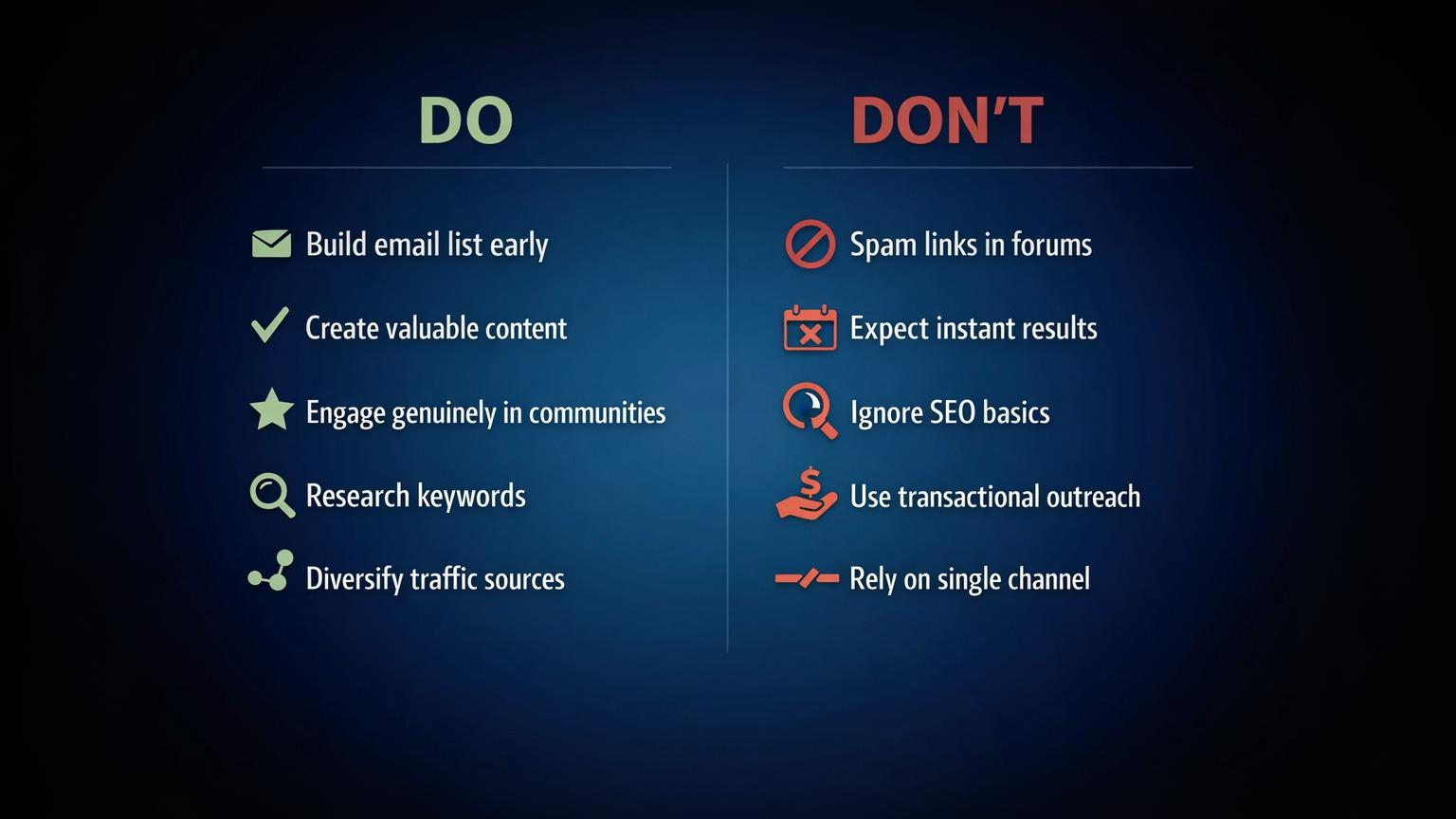
The most common mistakes are expecting immediate results, trying to skip SEO fundamentals, relying too heavily on one channel, approaching relationships transactionally, and failing to capture emails from interested visitors. Avoiding these pitfalls significantly improves your chances of building sustainable traffic.
Start with one method suited to your skills and resources, implement it consistently for several months, then layer additional channels once the first shows progress. Building a successful blog without social media is absolutely achievable—it just requires patience, consistency, and focusing on methods that align with how you work best.
📚Related Articles

Can You Actually Make Money on Reddit?
Yes, you can make money on Reddit through official programs and community participation, but it requires genuine engagement, meeting eligibility requirements, and understanding platform-specific rules.

Do I Need a Camera for Vlogging?
No, you don't need a dedicated camera to start vlogging. Your smartphone's camera quality is sufficient for beginners to create engaging content and test your vlogging concept. Upgrade to a dedicated camera only after you've proven your content works and identified specific limitations your phone can't overcome.

Showing 3 of 4 posts